

Phishing Simulation In Bank For Proactive Cyber Defense
Phishing Simulation In Bank For Proactive Cyber Defense
See why Phishing Simulation in Banks is non-negotiable for reducing human error and strengthening defense against cyber threats.
CyberSecurity
January 19, 2026

Ashfat Al Rashid
SQA Engineer specializing in backend testing, API automation (RestAssured, Postman), and test automation with Java. Proficient in UI automation (Selenium, POM) and performance testing (JMeter). Experienced in manual, regression, database, and UAT testing, ensuring software quality across various platforms.

Md. Asad Chowdhury Dipu
I am a mobile app developer specialized in Native Android and Flutter, with a keen focus on building applications that stand out for their intuitive design and superior user experience. My expertise extends into the realms of data science and backend technologies, complemented by a rigorous approach to testing, including automated and manual methods, to ensure the highest software quality.
Phishing Simulation In Bank: From Awareness To Action
Over 70% of successful cyberattacks on banks begin with a single phishing email. In today’s fast-paced digital world, banks and financial institutions are becoming the primary target for cyber criminals. Human error still remains one of the most vulnerable surfaces for exploitation. Phishing remains one of the core causes of cybersecurity vulnerabilities. Phishing Simulations in Bank & financial institutes are are becoming increasingly important, highlighting the need for cybersecurity awareness and training.Attack Methods Used Against Banks
The financial industry holds vast amounts of sensitive information. Due to the nature of the industry safeguarding customer information is non-negotiable. Due to this nature, banks and financial institutions face a unique set of cybersecurity challenges. Phishing and social engineering attacks targeting banks and financial institutions are designed to exploit human trust rather than technical weaknesses, affecting both employees and customers. Below are some Phishing methods used against banks and financial institutions.- Email Phishing (Credential Harvesting)Attackers send emails disguised as internal bank communications or trusted partners, prompting employees or customers to enter login credentials on fake portals.
- Spear Phishing Targeting Bank StaffHighly targeted emails crafted using employee roles, internal processes, or recent events to trick staff into approving transactions or sharing sensitive information.
- CEO or Executive Impersonation (Whaling)Fraudulent messages appear to come from senior executives, pressuring finance or operations teams into urgent fund transfers or data disclosure.
- Customer Account Alert PhishingFake security alerts claiming suspicious activity on bank accounts, designed to panic customers into clicking malicious links or sharing OTPs.
- SMS and Mobile Phishing (Smishing)Text messages posing as bank notifications, KYC updates, or transaction confirmations that redirect victims to malicious websites or call centers.
- Voice Phishing (Vishing)Attackers impersonate bank officials over phone calls, convincing victims to reveal card details, PINs, or verification codes.
- Third-Party or Vendor PhishingCompromised vendors or service providers are used as a trusted entry point to launch phishing attacks against bank employees.
Phishing Simulation: A Proactive Defense
According to Verizon’s annual Data Breach Investigations Report, approximately 60 to 68 percent of breaches succeed due to employees failing to recognize cyber threats. Phishing simulation is a cybersecurity exercise in which organizations send simulated emails, SMS, and messages to employees to test their ability to identify and report real threats. According to Verizon Data Breach Investigations Report (DBIR), organizations with regular security awareness programs, including phishing simulations, experienced significantly fewer phishing and social engineering driven breaches, as phishing success rates dropped steadily with repeated simulations.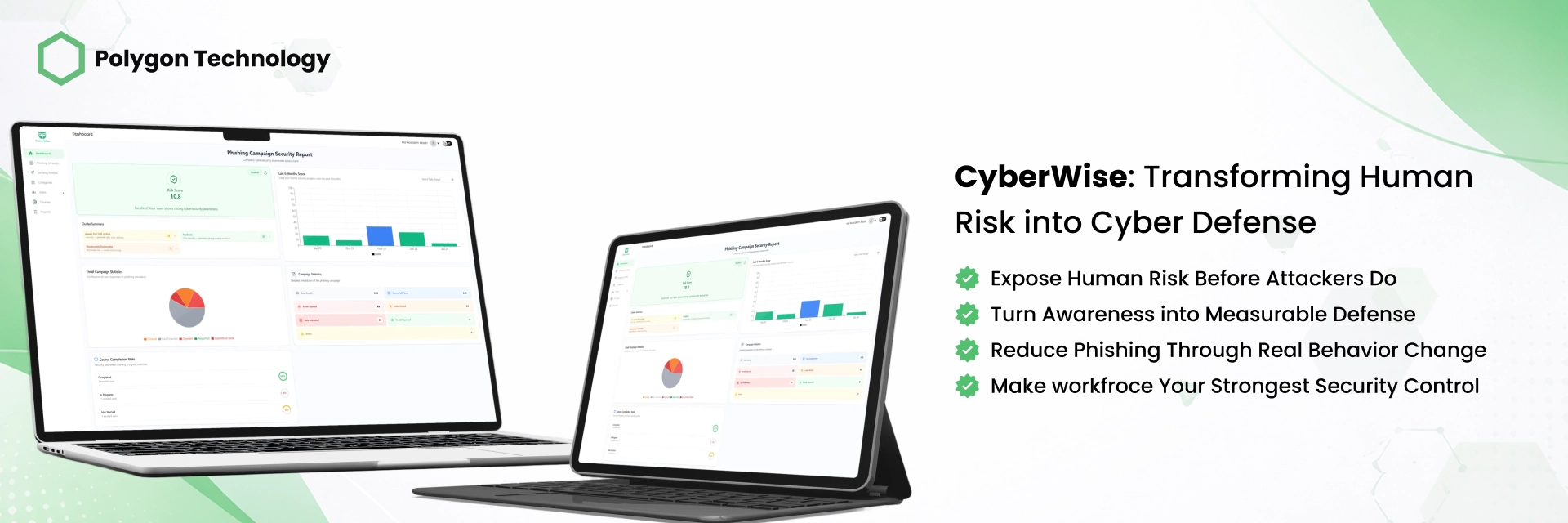
Why Banks Need Phishing Simulation?
As the world evolves, so do cyber threats, and providing generic training won’t be enough to keep the workforce and sensitive business information secure from criminals. That is why Phishing Simulation in Banking and Financial Institutions is crucial. Organizations need a system that identifies vulnerable employees and risk prone behaviors.Key Aspect of Phishing Simulation
- Mimics Real Attacks: Simulations mimic real world phishing attempts & social engineering tactics, such as creating urgency or impersonating trusted entities to trick users into clicking links, opening attachments, or entering sensitive data.
- Tests Human Vulnerability: The goal is to see who takes the bait (e.g., clicks a link to a fake login page, enters credentials) and who correctly identifies it as a scam.
- Provides Immediate Feedback: Users who “fail” the test are often directed to a landing page with educational content explaining the red flags they missed.
- Informs Training: The results help IT departments identify employees needing extra help and tailor future security awareness training to specific threats.
Phishing Simulation Tools for Banks: CyberWise
Organizations can now leverage technologies to transition from manual simulations to platforms, enabling them to provide cybersecurity training efficiently. Human risk management platforms, such as “CyberWise” enable banks and Financial Institutions to create realistic phishing simulations. Equips security teams with easy-to-use pre-built Phishing simulation templates and a drag-and-drop phishing template builder to run Phishing campaigns across teams. It also comes with pre-built training programs with the flexibility to create and provide tailored training programs with its built-in learning management system. This allows organizations to not only test but also evaluate the effectiveness of the training through trackable metrics.Phishing Simulation: Best Practices
Effective Phishing Simulation Focuses on continuous education rather than punishment. It requires transparency, realism, immediate feedback, and micro-trainings rather than one time workshop people barely remember.Key Best Practices:
- Transparency & Communication: Announce the program upfront as skill-building, not entrapment, explaining its educational goal.
- Realism & Relevance: Create personalized scenarios using internal lingo, current events, and familiar department names
- Education & Feedback: Deliver instant, “snackable” training modules immediately after a click, focusing on red flags.
- Continuous & Strategic Approach: Run simulations regularly (monthly/quarterly) and randomly to build habits and avoid desensitization.
- Culture & Metrics: Get leadership to champion the program and share success metrics to build motivation.
Stay Ahead & Secure with “CyberWise”
When it comes to security, investing in the right technology is essential. “CyberWise” a comprehensive phishing simulation and cybersecurity awareness training platform, enables banks and financial institutions to assess their current cybersecurity posture and implement necessary changes to strengthen cyber security defenses.
We use cookies to ensure that we give you the best experience on our website. If you continue to use this site we will assume that you are happy with it.AcceptPrivacy policy